
In today's interconnected world, maintaining consistent smartphone network availability is crucial for both personal and professional communications. The reliance on mobile devices means that unexpected signal loss or prolonged periods without connectivity can disrupt essential activities. Ensuring your device remains connected, especially in challenging environments, requires a proactive approach to its configuration. This article explores practical adjustments to enhance your smartphone's ability to stay linked.
Many users experience situations where their smartphone struggles to maintain a stable connection, leading to missed calls, delayed messages, or an inability to access online resources. This often occurs in areas with weak signal strength, during travel, or when battery levels drop significantly. Understanding how device settings influence network performance is key to overcoming these common frustrations and securing reliable communication channels.
Optimizing your smartphone's internal settings can significantly extend its operational time within a network's reach. This isn't just about preserving battery life, but also about making the device more efficient in acquiring and holding onto available signals. For instance, knowing when to adjust network modes or disable certain background processes can make a substantial difference in maintaining connectivity, even when a mobile recharge point is far away.
The challenge extends beyond simply having a network signal; it involves ensuring that the device efficiently utilizes that signal without excessive power consumption. In scenarios where immediate access to communication is paramount, such as during emergencies or critical business operations, a well-configured smartphone becomes an invaluable tool. Synthcomkusq recognizes the importance of uninterrupted connectivity for all users.
Consider the implications for remote workers or individuals frequently traveling through diverse terrains. Their ability to stay connected directly impacts productivity and safety. Simple, yet effective, adjustments can prevent the frustration of a dropped call or the inability to complete an urgent online task. Even for routine usage, an optimized phone reduces the need for frequent mobile recharge and enhances overall user experience.
-
🌐 Smart Network Mode Selection
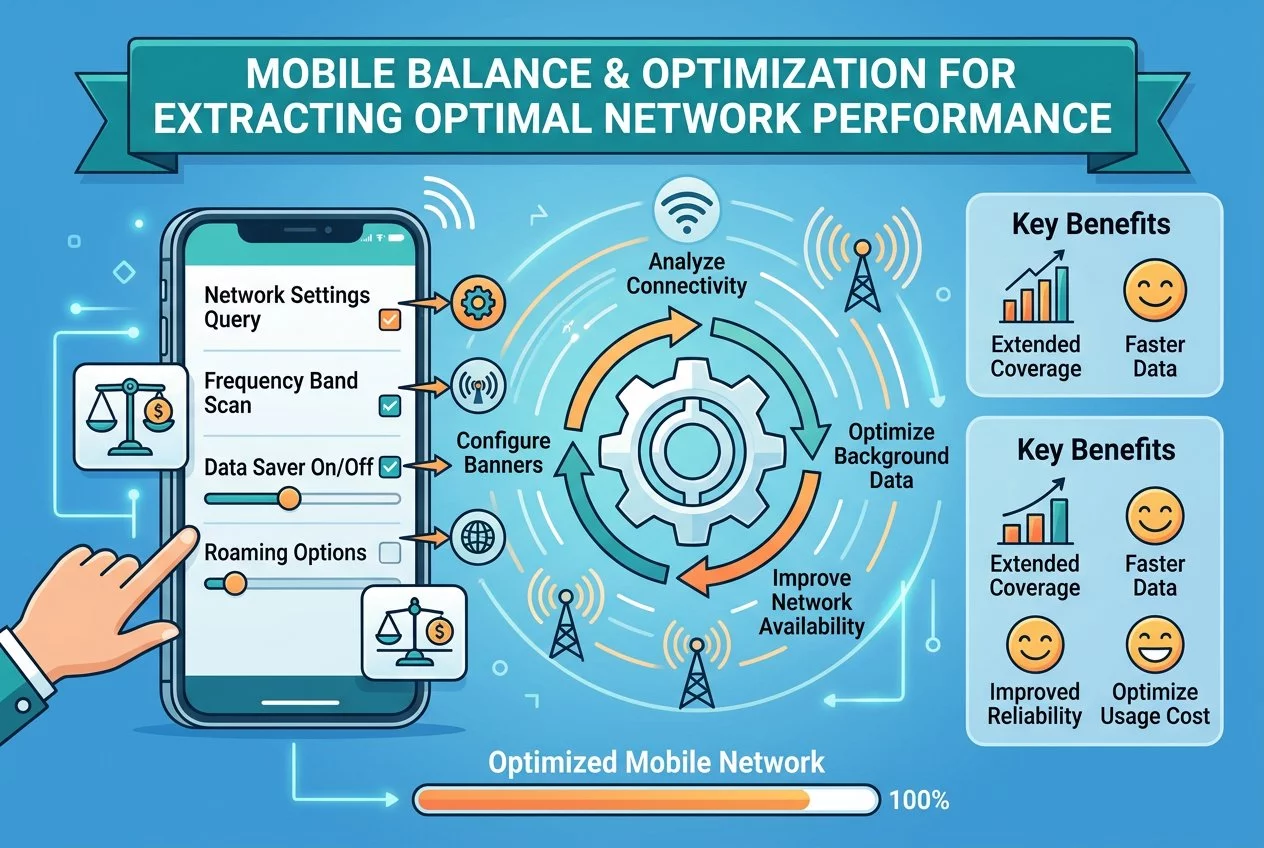
One of the most impactful settings for extended network availability is the judicious selection of your smartphone's network mode. Modern smartphones typically offer various options such as 5G, 4G (LTE), 3G, and 2G. While 5G and 4G provide faster data speeds, they often require more power and may struggle in areas with limited coverage. In contrast, 3G and 2G networks, while slower, tend to have broader reach and consume less power, making them ideal for maintaining basic connectivity in fringe areas.
Manually switching to a 3G or even 2G-only mode when you anticipate weak signal strength can dramatically improve your device's ability to stay connected for calls and SMS. This prevents the phone from constantly searching for a higher-speed, but unavailable, network, which is a significant drain on both battery and network resources. This proactive adjustment ensures that essential communication lines remain open, even when high-bandwidth activities are not possible. Synthcomkusq solutions often incorporate features that aid in intelligent network management.
Furthermore, consider disabling automatic network selection in challenging environments. By choosing your preferred network operator manually, you can prevent your device from hopping between different networks, which can lead to connection instability and increased power consumption. This focused approach to network management ensures a more consistent and reliable connection, especially in areas where multiple network towers might be vying for your device's attention.
-
🔋 Optimizing Background Processes
Background applications and their continuous data synchronization are silent consumers of both battery and network resources. Many apps regularly refresh content, check for updates, or send notifications even when not actively in use. This constant activity forces your smartphone to frequently engage its network radios, leading to increased power drain and potentially straining network availability, especially when signals are already weak. Reviewing and restricting background data usage for non-essential applications can significantly reduce this burden.
Access your phone's settings to identify which apps are permitted to run in the background and consume data. Disabling background refresh for social media, news feeds, or other non-critical applications can free up valuable network bandwidth and extend your device's ability to maintain a connection. This targeted optimization helps preserve battery life, indirectly contributing to longer network availability without the immediate need for a mobile recharge.
-
📍 Managing Location and Connectivity Features
Location services, Bluetooth, and Wi-Fi, while incredibly useful, can also impact network availability and battery performance if not managed effectively. When GPS is constantly active or when your phone is perpetually scanning for Wi-Fi networks or Bluetooth devices, it expends significant energy and can interfere with the primary cellular radio's performance. In situations where network availability is critical, temporarily disabling these features when not in use can be highly beneficial.
For instance, if you are in an area with no known Wi-Fi networks, turning off Wi-Fi scanning prevents your device from wasting power on a futile search. Similarly, disabling Bluetooth when no peripherals are connected reduces unnecessary radio activity. These small adjustments cumulatively contribute to a more stable and prolonged network connection, allowing your device to dedicate its resources to maintaining cellular contact.
Implementing these practical adjustments to your smartphone's settings can significantly enhance its capability to maintain extended network availability. By proactively managing network modes, background processes, and auxiliary connectivity features, users can experience more consistent and reliable communication, even in challenging environments.
The benefits extend beyond mere connectivity; they encompass improved device endurance and a reduction in the stress associated with unexpected signal loss. These optimizations empower users to stay connected when it matters most, ensuring seamless personal and professional interactions. Synthcomkusq is committed to helping users maximize their device's potential.
Ultimately, a well-configured smartphone is a more dependable tool. Taking a few moments to adjust these settings can yield substantial improvements in your daily mobile experience, transforming potential connectivity frustrations into reliable communication pathways. Prioritizing these simple steps ensures you are always within reach.



leave a comment